
Table of contents
For a country with such strong inclinations towards spiritualism and reverence of multiple deities, India quite understandably possesses both an incredible number of temples and devotees who go there to pay their respects. This piety is often channeled through prayers and deep thoughts, but more often than not, it comes in the form of a donation to the temple. Considering the vastness of India and the overwhelming majority of religious people living there, it begs the question of which one of the myriads of temples gets most visitors (and donations) making it the richest temple in India. While there’s certainly a huge number of temples that expose great wealth and luxury, finding the one that supersedes all others was unexpectedly easy. There’s a temple in India that soars high above all others in terms of riches, so much in fact that its wealth brought it a lot of attention, even from the Indian government that otherwise tries not to interfere with matters of religion. This is the story of the Padmanabhaswamy Temple. 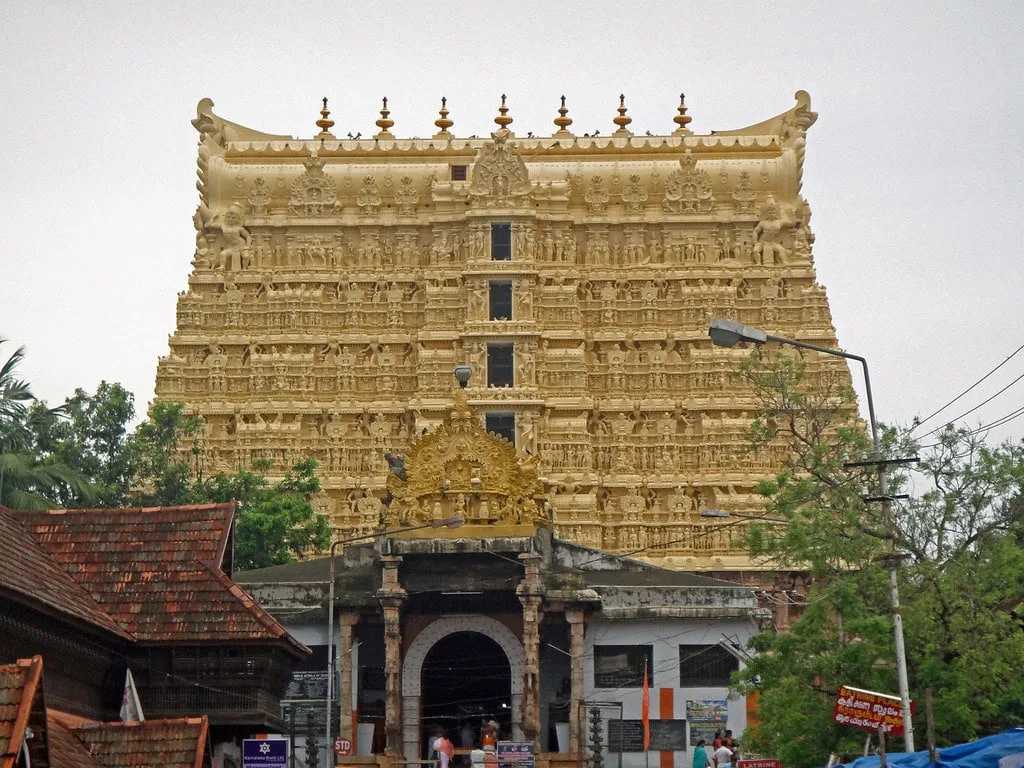
What is the Padmanabhaswamy Temple?
One of 108 Divya Desams, or holy abodes of Lord Vishnu, Padmanabhaswamy Temple holds a prominent spot in the history of India, and more specifically, Kerala. Some scholars date the temple to be more than 5,000 years old, which quite naturally seems overexaggerated. More reasonable assessments put the origins of this temple somewhere around the 5th century BC, while others push this figure to the 3rd century AD. A decent number of Hindu texts actually reference Padmanabhaswamy Temple, works of indisputable cultural and historic importance such as Varaha Purana, Padma Purana, Brahma Purana, Matsya Purana, Skanda Purana, Bhagavata Purana, and Vayu Purana. Works of Sangam Tamil literature make mention of the temple, putting it close to the aforementioned centuries. Read more: Summer Holiday in India The importance of this temple is probably best emphasized by the fact that the city of Thiruvananthapuram has been named so due to the existence of this temple, its name literally meaning ‘The City of Lord Ananta’ in Malayalam.
Architecture
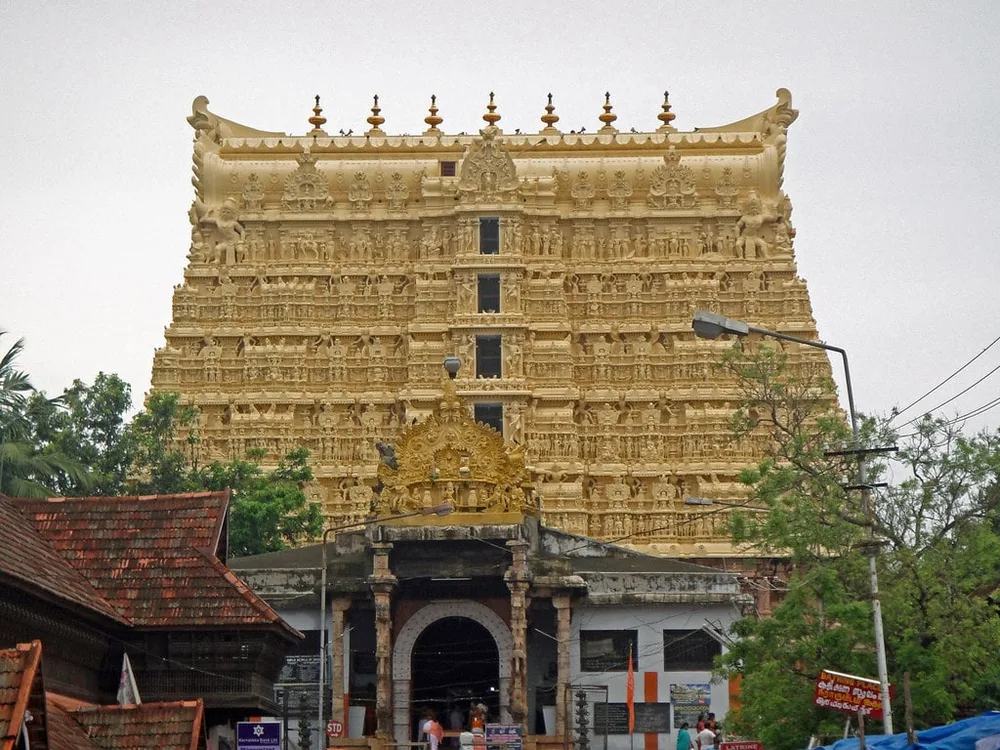
The Padmanabhaswamy Temple combines the unique style of its birthplace Kerala with the design of neighboring Tamil Nadu and its Dravidic heritage. The latter can easily be recognized in the high walls of the temple and a Gopuram which was added in the 16th century. The deity of the temple, Lord Padmanabha resides in the sanctum sanctorum, depicted as reclining on the great serpent Anantha. The platforms of Vimanam were cut from a single rock, with three doors surrounding the deity’s pedestal. The towering temple has golden plaiting and ornate doors and walls.
Riches of the Padmanabhaswamy Temple
Now we get to the more interesting part of the story, and the one we’ll mostly elaborate on. There is much to be said, so bear with us.
The Origin of the Wealth
So far, we’ve established that Sangam Tamil literature speaks of a temple such as the Padmanabhaswamy Temple and that this account makes it at least 2,500 years old. However, we’ve omitted the fact that it’s referred to as the Golden Temple, meaning that the hoarding of its riches began in ancient times. 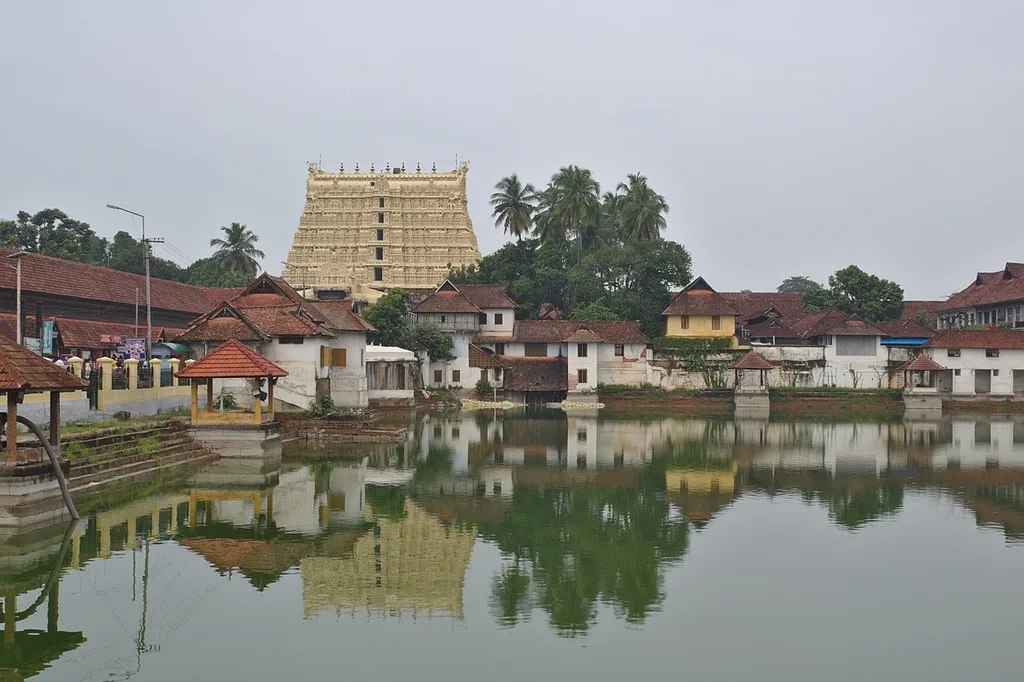
Protection of the Temple
By now, you must be wondering how this wealth managed to remain intact throughout the millennia, untouched by robbers and barbarians that often desecrated places of such magnificence. There’s a twofold explanation of this unique situation. The Padmanabhaswamy Temple was protected by a council known as Lords of the Eight Houses, presided by King and Council of Eight. They maintained the wealth and kept it safe against any potential intruders who were not of the Hindu religion and had not revered Vishnu. As for those that practiced Hinduism, they were kept at bay either out of respect for the deity or for the fear of divine retaliation. 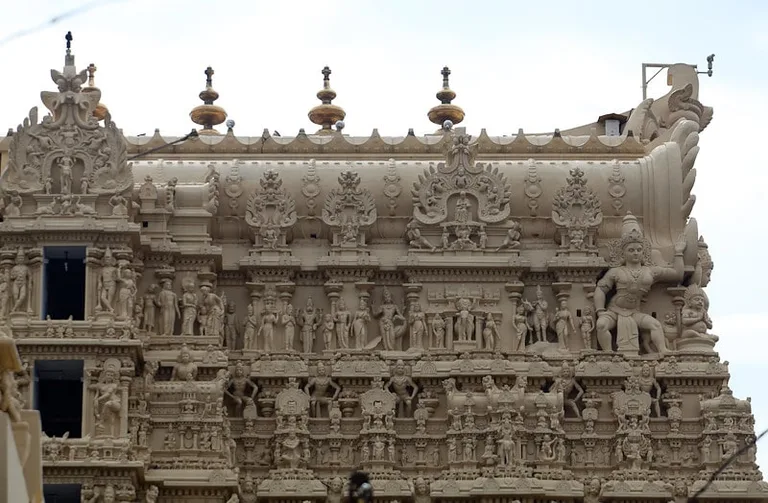
The Vaults
For the purposes of this article, we’ll use the same nomenclature that was assigned to each of the vaults by the Supreme Court. At that time, there were 6 vaults with antechambers brimming with gold. They were simply designated as vaults A, B, C, D, E, and F. Vault A was opened in the 1930s, while Vaults C, D, E, and F are opened from time to time by two priests in charge of them. What prompted the government to take action and remove the Travancore family as the curators of the temple were complaints of mismanagement and gold going missing. Read more: India for Couples When the Supreme Court started taking inventory of all the wealth in 2011, they were not prepared for they were about to find. Not only did they photograph and go through all the gold and jewelry of all the vaults (except for B), but they also noted all the riches of their antechambers and even some hidden chambers and storages unheard of before. 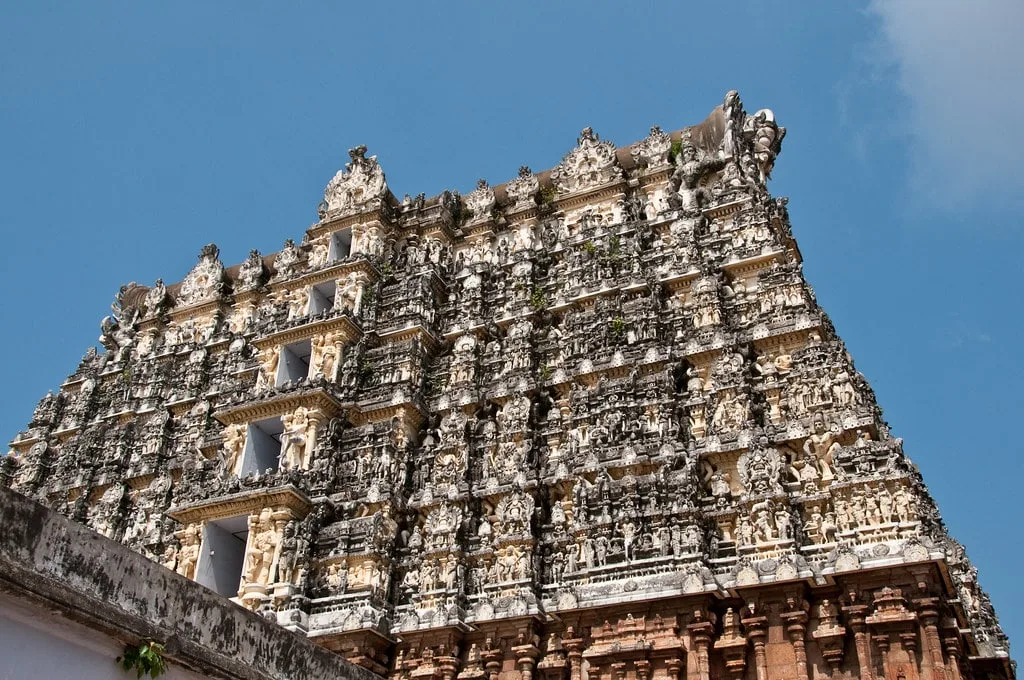
Conclusion: The Richest Temple in India
What problems do now arise from this situation? What does all this wealth mean for the people of India? To this day, the temple earns money from the loyal followers of the faith. Each annual donation (estimated at 3,000 kilograms of gold) makes it that much richer, and that’s not even taking into account the infinite wealth found in the vaults. While all the donations are meant to be spent on maintaining the temple and giving back to the poor, it’s questionable how much of that wealth will reach those who need it the most. It’s still just sitting there, guarded by officers with automatic rifles and government pondering what to do with all that wealth. Hopefully, some of it will find its way to those who need it the most, and not to corrupt government officials. Read more: Top 10 Richest Temples in India